Help Spread The Word!

If you like our book review site, please recommend it to others. If you would like to join our reviewing community send me an email under the Ron Simpson profile. Thanks.

Tuesday, April 29, 2008

Vagabond - Bernard Cornwell

Vagabond is the second book on the Grail Quest series by Bernard Cornwell, author of historical fiction.

My last review (The Archer's Tale) was a little harsh on his accounting of the rampant violence in the Middle Ages, but more than that, less of a plot. Vagabond is much better in that respect. The hideous violence is still present but in less quantities and character development is very good in this novel.

The story continues very soon after The Archer's Tale ends. The Scottish armies are now involved in the Hundred Years War, allied with the French, but the English are showing to be tough to defeat on the battlefield, mainly due to the English bows, later called longbows by historians. England is the only country to have developed significant skill with the longbow and therefore had an edge in many battles during this time.

Our protagonist, Thomas of Hookton, is now on fire with his search for information about the Holy Grail, but not yet the Grail itself. But he soon finds out that there are others who even more zealous for the whereabouts of the Grail. His travels take him back to France where he hopes that he has shaken those who would capture and interrogate him about the Grail, but he finds himself right back "into the fire." One of his chasers is a Dominican priest, but more specifically an Inquisitor of the famed Inquisition. Thomas has to endure a gruesome torture session from the Inquisitor. Meanwhile, the Duke, Charles of Blois of France, is attempting to take back some of the land the English had taken in the previous book. This leads to the battle climax when all the characters come together.

Stories about the Holy Grail are numerous. Some are even silly. Even though the topic is overdone in writing and literature, Cornwell does a great job with the legend. My guess is that is will remain a mystery. That would be in line with his style writing when dealing with mystical and religious acts and relics. I look forward to the final book in the series, Heretic.

Wednesday, April 23, 2008

The Archer's Tale - Bernard Cornwell

The Archer's Tale is the first book in the Grail Quest series by historical fiction writer, Bernard Cornwell. It is set toward the beginning of the Hundred Years War in France, in the 14th century. As per his obligatory historical note at the end of the book, all of the major battles are mostly historically accurate with the characters and the places.

The story is mostly told from the point of view of Thomas of Hookton, a bastard child of a priest from southern England. Following a raid on Hookton, Thomas, already excelling with the bow, flees and joins a unit of arms that serves the king of England. The underlying tale, behind the invasions and battles, is of a Christian relic, a lance that is old ash and warped but is said to possess power, a la Gabriel's feather, or the leg bone of the donkey that Jesus Christ rode on into Jerusalem on Palm Sunday. This was the prevailing mystical belief of relics in those days. Thomas soon finds out that he may not be English at all. And this all revolves around the lance and possibly other holy relics...like the famed Holy Grail.

Thomas also has a few love interests throughout the story but those plot lines don't seem to get off the ground. In fact, the historical battles seem to oppress any dynamic plot, although there is character development with Thomas and a couple other major characters. I found that there were large chunks of pages devoted to retelling of history, specifically the battles. I came away wanting a little more plot and less history.

This war is a bloody time in European history. The battles are describes in gory detail; swords into the gut, axes to the head, hamstringing horses, raping and pillaging after the battles, etc. I enjoyed Mr. Cornwell's writing as always. I just wanted more education on a breadth of topics and not just how bloody the battles were. I tend to push through battle scenes rather quickly. While necessary, they can be overdone. I can't help but compare this book to the Warlord Trilogy and the Saxon Tales, both of which are wonderfully balanced with the barbarism of the Middle Ages and the humanity of love and brotherhood.

Overall, though, I enjoyed this book and will continue the series. I look forward to see where Thomas goes after his first major battle.

Monday, April 21, 2008

Goetia (Hellgate: London) - Mel Odom

The struggle to rid London - and the world - of the demons released from the Hellgate continues in this second novel, in which ex-Templar Simon Cross continues with the struggle of finding citizens lost in the remains of London and growing an army of fighters to battle the Darkness.

Meanwhile, on the other side of the city, Cabalist Warren Schimmer has become the underling of the powerful demon Merihim, who wishes to take his place in the higher demon hierarchy. To do this, Warren must, with direction from the demon and a "bound" voice, knock their opposition from their thrones so his master can rise in the ranks.

But a new weapon to battle the demons has been discovered - the Lesser Key of Solomon, or 'Goetia', a book containing the true names - a tool controlling the demons' vulnerability - of the higher demons stalking the streets of the city. Will Simon and his rogue group of warriors be able to find Goetia and save the world from the demons oozing from the Hellgate?

Odom has a great way to packing this good-versus-evil plot with enough suspense and mystery to allow it to stand out among similar stories. His clever wording throws powerful punches into tame situations and helps to clarify the happenings of a high-energy situation. This series, ending with the late August release of Covenant, is one not to miss.

Wednesday, April 16, 2008

Lords of the North by Bernard Cornwell

Lords of the North is the third book in the Saxon series by Bernard Cornwell, writer of historical fiction.

This is a continuing saga of Uhtred, a warlord and ousted lord of a piece of land in northern Saxon England in the 9th century, during the reign of Alfred the Great. Uhtred has helped King Alfred defeat the Danes in parts of England and is now on a quest to reclaim his land, but many things stand in his way.

He has a blood feud with a Dane named Kjartan, who resides in Dunholm, between Uhtred and Bebbanburg, his land. Also in his way is Ivarr, nephew of a Danish warlord that Uhtred has already killed.

Uhtred is also hindered from his quest by slavery and then being coerced into oaths to King Alfred, whom he doesn't like due to his pious Christian ways, but their fates seem to be tied to each other. "Fate is inexorable" is the theme that seems to resonate through Uhtred throughout the story.

The fourth book in the series is called Sword Song.

Sunday, April 13, 2008

The Pale Horseman by Bernard Cornwell

The Pale Horseman begins immediately after the events in the previous book, The Last Kingdom. Uhtred has helped defeat part of the Danish invaders.

Once again, Uhtred is caught between loyalties. On one hand, he is Saxon, born and bred. Even though he does not embrace the Saxon Christianity, but believes in the Norse battle gods, he longs to recapture his father's land in northern England. But, Uhtred was taught to fight by the Danes and he loves them more than he does his own countrymen. He has made oaths to both Saxon and Dane.

While Uhtred is the main (fictitious) character in the story, the history is based on much information on Alfred the Great's reign as king of Wessex in England. Alfred is a pious Christian that is reluctant in battle and suffers from gastrointestinal problems. Uhtred hates Alfred but has an oath to him so he fights for him.

The story winds to a pivotal battle between Saxon and Dane armies. Loss of life is high in the shield wall. Uhtred's character, now in his early 20's, is being developed into an adult, a warlord and landholder. He is writing about himself, as an older man looking back on his stupidity of youth.

The Pale Horseman is the second in Cornwell's Saxon Tales. The next book, which I will be starting on very shortly, is The Lords of the North. These are excellent!

Breaking A Sunbeam - Geoff Hunter

Just how far would you go for the person you loved? Jake proves hard to beat with his steadfast love for Kay in this action-packed, horror-tinged thriller.

In response to his wife's ransom kidnapping following a robbery-gone-awry, Jake agrees to assist a trio of law-evading gun-wielders in their leader Juel's quest to seek revenge on the enemies of her past. But what seems like a simple house-burning leads straight into a chain of shoot-outs and murders that even CSI would be puzzled by. And while the plot seems relatively straight-forward, the inner turmoil of each character is anything but.

The book starts off a bit slow, but much like a rollercoaster ride, once it reaches the top and starts speeding downward, the speed picks up and it will be hard to put down. The details of each person's past tribulations make for gruesome, Krueger-ready altercations, including a medieval approach to beheading. Those particular parts may not mix well with your lunch.

That aside, Hunter's twisted tale of tested love is worth a read. Those who favor Tom Clancy's writing will love the minute-by-minute gun-shooting action, while those who favor a unbreakable love story will enjoy the story's underlying drive. A great novel, just begging for a sequel.

Friday, April 11, 2008

Tairen Soul by C.L. Wilson


Tairen Soul
by
C.L. Wilson


These books were originally one very long book that were published as two. Lord of the Fading Lands is Wilson's first published novel and she spins a tale so engrossing and intricate that you soon lose yourself in a world full of magic, both light and dark, honor, betrayal, and truemates Rain and Elly. Lady of Light and Shadows is the continuation of their intriguing story.

Rainier vel’En Daris (Rain Tairen Soul) is the Fey King who is called from the sky while in his Tairen form (a large panther-like creature with wings who can breath fire) by Ellysetta Baristani, a mere woodcarver's daughter with a secret past that may destroy both their worlds.

Wilson has now moved to the top of my favorite author's list. Her next book in the series, King of Sword and Sky, will be out in October 2008 (I am definitely pre-ordering) and Queen of Song and Souls will be released in early 2009.

I was reminded of Lord of the Rings while reading these books. It's the closest thing I can give you to describe the world that she has created. I would be willing to bet that these books will be made into a movie/movies. They are FABULOUS!

Check out C.L. Wilson's site, the link is on the right of my blog.
Look out JK Rowling, CL Wilson is ready to join your ranks!
Thanks for the invite Ron, I'll try not to use my potty mouth!

Tuesday, April 1, 2008

The Last Kingdom by Bernard Cornwell


The Last Kingdom is the first book in a new series called The Saxon Tales by Bernard Cornwell, an excellent historical fiction author.

The setting is 9th century England. Most of England is Saxon now with western pockets of old British (alluding to Cornwell's previous Warlord Trilogy dealing with Arthur in the 5th century) and now the Danes (sometimes called Vikings, Northmen or just pagans) are invading and pillaging England.

The story centers around a boy named Uhtred, the son of an ealdorman, or landowner, in northern England. While his people are of the medieval Christian ilk, Uhtred finds that he favors the pagan gods that circulate through Europe. This, again, is the main dynamic engine that drives Cornwell's ancient stories, Christian God vs. pagan gods. Uhtred is captured early in the story by the Danes, but his captivity becomes more of an adoption into a better family, in that Uhtred, instead of studying his letters and reading the Holy Scriptures like the priests want him to do, he wants to become a warrior, like his father. Being captured by the Danes offers him that opportunity. He also becomes very tied to the Danish gods of war, Thor and Odin.

Following his "captivity", Uhtred spends several years and the rest of the story trying to discover his true identity, being pushed to and fro by his circumstances. He loves many of the Danes as family and loves the Danish warrior ways, but his homeland of Bebbanburg in northern England is the land he wants to retake from his uncle, who has usurped the land after Uhtred's father's death.

Uhtred is also growing as a strong warrior in this story. He looks forward to fighting in the shield wall, a groaning and ugly nexus of blood and death. The shield wall is how the ancients fought. Shields overlapped. Men pushing the frontlinesmen into the opposing wall. Swords and axes and spears taking lives at every moment. This is what Uhtred craved and feared. Would he be a strong enough warrior?

As with the other few of Cornwell's books I've read so far, he gives historical notes on the facts and speculations of the historical record. He also gives his reasoning for the path of his story, especially if the history is not clear or if his story deviates from the record. I find that I really look forward to his notes after the last line of the story in that his interest and scholarship is obviously good. Although the story is centered around fictional Uhtred, the swath of the tale is about Alfred the Great, about whom much has been written and cataloged.

Once again, Bernard Cornwell amazes with his skill at bringing his coloring of ancient historical events to life. I cannot recommend him enough to those who have a longing for historical fiction.

Monday, March 31, 2008

Me2 - M. Christian

Talk about an identity crisis.

M. Christian (or is it?) puts a whole new spin to the genre of mind-bending thrillers with Me2, a twisted and psychological tale of individuality and the lack of it. Though my description doesn't sound that scary or interesting, I can't do justice to Christian's pulse-pounding skill of turning one man's relatively simple life around with the numerological Genetic Mirror Theory, which says that every human has a genetic twin. (Those who haven't heard of it can check any message board or website for TV show Lost for more info.)

Christian is very unique in his delivery, carving a Starbucks-employed, California-destined, gay "Boy of Summer" into a paranoid, mentally-intuitive, questionably-sane wanderer trying to find his true self (not matter how contradictory those adjectives are). His character's pursuit for his copycat takes him many a party and gathering, one during which he unintentionally gets a little friendly with a darkness-veiled guest.

Christian's visual descriptions (when provided) are vivid and entrancing, gathered in a somewhat confusing order to throw off the reader and any concluding thoughts they may have about this so-called twin and his gradual reign over Christian's character. It's cryptic, enthralling, horrific, fascinating, and never truly reveals its secrets - a great story, indeed.

Friday, March 21, 2008

My Grandfather's Son by Clarence Thomas

My Grandfather's Son
By Clarence Thomas


This memoir by Supreme Court Justice Clarence Thomas is the long awaited story of the life of a most remarkable man. The story of Clarence Thomas is the story of the American dream fulfilled - a young man who barely spoke English rises to one of the most important people in the nation.

His trajectory to importance began with his life lived with his Grandfather, who taught his strict work ethic and value system to Clarence and his brother. Life was not easy, but the stories that Justice Thomas shares speak of family and love and value.

This is an emotional and spiritual journey. Justice Thomas allows us a vision of a life well lived and the trials that go along with it. It also presents a very different view of the confirmation hearings than have ever been heard before.

Best of all, it is written like a magnificent novel - each page alive with the stories of people you would be honored to know.

This is a must read book!


Tuesday, March 18, 2008

"Road of the Patriarch" by R.A. Salvatore


Mass Market Paperback: 384 pages
Publisher: Wizards of the Coast (July 10, 2007)
ISBN-10: 0786942770
ISBN-13: 978-0786942770

R.A. Salvatore concludes his serie „The Sellswords” in „Road of the Patriarch”. And I think that even though the outcome is good it could have been better.
Jarlaxle and Artemis Entreri continue their adventures in Bloodstone Lands that began in the previous novel of the serie, „Promise of the Witch-King”. After their contribution in the elimination of Witch-King’s remnants they found themselves in the grace of the king Garteh Dragonsbane. But their actions lead them to a very different position and situation. And in the end is all about the inner feelings and thoughts.
Overall I liked the novel, but I think is a little under the expectations I had after reading „Promise of the Witch-King”. The pace had slowed a little, but I think is because „Servant of the Shard” and „Promise of the Witch-King” has a lot more action and „Road of the Patriarch” considers more the inner feelings of the characters and the consequences of their actions. So all together is not such a bad thing.
I thought that the first part of the book was a excuse for the final part. After I had finished reading the novel I was more impressed by the end rather than the beginning. And I think of the beginning not as a follow of the previous novel, but as a introduction for the outcome of this one. And at a personal level I didn’t liked the Heroes of Bloodstone. I found them to good to be true, without flaws in their actions. And Riordan Parnell annoyed me with his interventions.
I prefered to start with what I think that are the weaker points of the novel, because I love the work of R.A. Salvatore and the things that I liked in „Road of the Patriarch” are many more than those I didn’t like.
As usual in the author’s works, the fighting scenes are great, imposing a sense of fluidity and speed. And even if some of the scenes go to a predictable point I couldn’t wait for the outcome because that was unpredictable. For example the scene when Olwen encounters Artemis Entreri.
I loved the amusing scenes, like that of the orc courier, and I loved that the author kept the humour of some dialogues. I liked Jarlaxle as character, I liked the turmoil of Artemis Entreri and I liked that R.A. Salvatore developed this characters, going in their past and introducing their history. And this is available also for the new character, Athrogate. And I loved that the author reintroduces the thoughts and feelings of Drizzt Do’Urden in beginning of each part of the novel. Those moments I enjoyed the most in the novels featuring the renegade drow elf.
In conclusion I have to say that I liked the novel, even though a little less than the previous two of the serie. I liked the end of „Road of the Patriarch” and I will recommend this read if only that is the sole good thing. But is not the only one so I give this novel 7,5 points out of 10.
Dark Wolf

Sunday, March 16, 2008

"A Game of Thrones" by George R.R. Martin


Mass Market Paperback: 864 pages
Publisher: Spectra (August 4, 1997)
ISBN-10: 0553573403
ISBN-13: 978-0553573404


The world of the literature would be far more poorer without George R.R. Martin. The author who was nominated and won the Hugo, Nebula, Bram Stoker and World Fantasy awards creates a novel „A Game of Thrones”, the first volume in „A Song of Ice and Fire”, that made me say only one thing: WOW.
„A Game of Thrones” describes a fantasy world, named the Seven Kingdoms, that resembles medieval Europe and the events that unfold in the novel are very much the same with those from that part of history. The novel has three storylines, not one like many others.
In the first storyline, Robert Baratheon, the king of Westeros after he claimed the crown in battle, visits his old friend, Eddard Stark in Winterfell. Robert asks his friend to become The King’s Hand, second in charge of the kingdom, after the mysterious death of the former Hand. So the Stark family, one of the most powerful in the land, is split up. After the return of the king in the capital city, named King’s Landing, starts a teribile fight for the throne that involves the Starks and Lannisters, the queen beeing a decender of the Lannisters.
The second storyline follows the events that occur at the northern border of the land, here lies the Wall, a construction that protects the country from the invasion of the mysterious creatures known as The Others. The story is centered on Jon Snow, bastard son of Eddard Stark, who is recruited in the Night’s Watch, the men who maintain and guard the Wall.
The third storyline is set on a continent east of Westeros where we find the Free Cities. Here had refuged Daeneys and Viserys Targaryen, the last known relatives of the previous king and they seek an army to help them retake the country and revenge the death of the king.
The author mixes brilliantly the three storylines so I was never in difficulty when I followed them. The intrigue is complex, surprising, following political conflicts, the struggle for power, betrayals and love stories, and the twists of the situations do the reading more pleasant. And even though the novel has many characters this fact doesn’t prevent me in savoring the read, because George R.R. Martin describes them very well, so well that you get attached to the characters. But here I have to warn you, because the author keeps the realism of life in his novel, the characters that we love can die as fast as those we don’t find very attractive.
I was thrilled about the fact that the author tells the story through different characters, so we benefit of different points of view about the same events, and this contributes to the atmosphere of the novel. And even though George R.R. Martin doesn’t create a entirely new world, in the true sense of fantasy, he comes with many new elements like The Others or the cycle of seasons, the winter can last a lifetime. At the end of my reading the author left me wishing more, with joy and sadness, and also with questions about the upcoming books in the serie. And if those are equal to „A Game of Thrones” I will be very happy.
The novel has some weak points, but this are very few and honestly I don’t want to recall them, so I will give the novel 10 points out of 10.
Dark Wolf

Wednesday, March 12, 2008

"Promise of the Witch-King" by R.A. Salvatore


Mass Market Paperback: 384 pages
Publisher: Wizards of the Coast (September 12, 2006)
ISBN-10: 0786940735
ISBN-13: 978-0786940738


I fell in love with fantasy literature since I had started reading. In fantasy one of my favourite character is Drizzt Do’Urden, created by R.A. Salvatore. Through Drizzt Do’Urden I met Jarlaxle, a mercenary drow elf, and Artemis Entreri, an assassin, the arch-enemy of Drizzt, the main characters of „Promise of the Witch-King”.
In „Promise of the Witch-King”, the second novel of „The Sellswords” trilogy, Jarlaxle and Artemis arrive in Bloodstone Lands following their adventures in Calimport. Here they are hired by two dragon sisters, Ilnezhara and Tazmikella, to find some relics that belonged to the Witch-King Zhengyi. So, the two of them become part of a group of adventurers that goes in the town of Palishchuk to investigate a castle that appeared after such a relic is found and used. Inside the castle, and I will say this without spoiling your read, they will come across some very interesting moments.
The novel is basically a „dungeon crawl”, not my favourite type of story, because I think it’s predictable and limited. But R.A. Salvatore does an amazing job in „Promise of the Witch-King” and manages to keep me interested all the way to the finish. He creates an intrigue and some twists and turns that extends the limits of this dungeon crawl.
Even from the opening part of the novel, when Jarlaxle and Artemis Entreri explore a tower of a lich, the pace is quick, full of action and details, and it gets better in the next chapters. The fighting scenes are great, very well described, keeping the high standard as well as the others of this kind of the author. I enjoyed this scenes very much, like I enjoyed the humour of some dialogues, amusing and entertaining, like I enjoyed the funny sequences of the Kneebreakers, a band of halflings or the way Athrogate, a dwarf, talks using rhymes. I enjoyed Jarlaxle, a character that begins to develop and is not tipical in fantasy literature.
In this novel R.A. Salvatore introduces new characters, but I think they are a little underdeveloped. Also I wondered how and why Jarlaxle and Artemis Entreri found themselves in Bloodstone Lands, following the events in the first novel of the trilogy, „Servant of the Shard”. But this are minor issues considering the bigger picture, they can be easily overcome in the next novel. Adding that the author teases us with a small part of Jarlaxle’s past and that the cold and calculated assassin Artemis Entreri has an inner conflict and developes more human feelings I certainly will read with interest the third book of the trilogy, „Road of the Patriarch”.
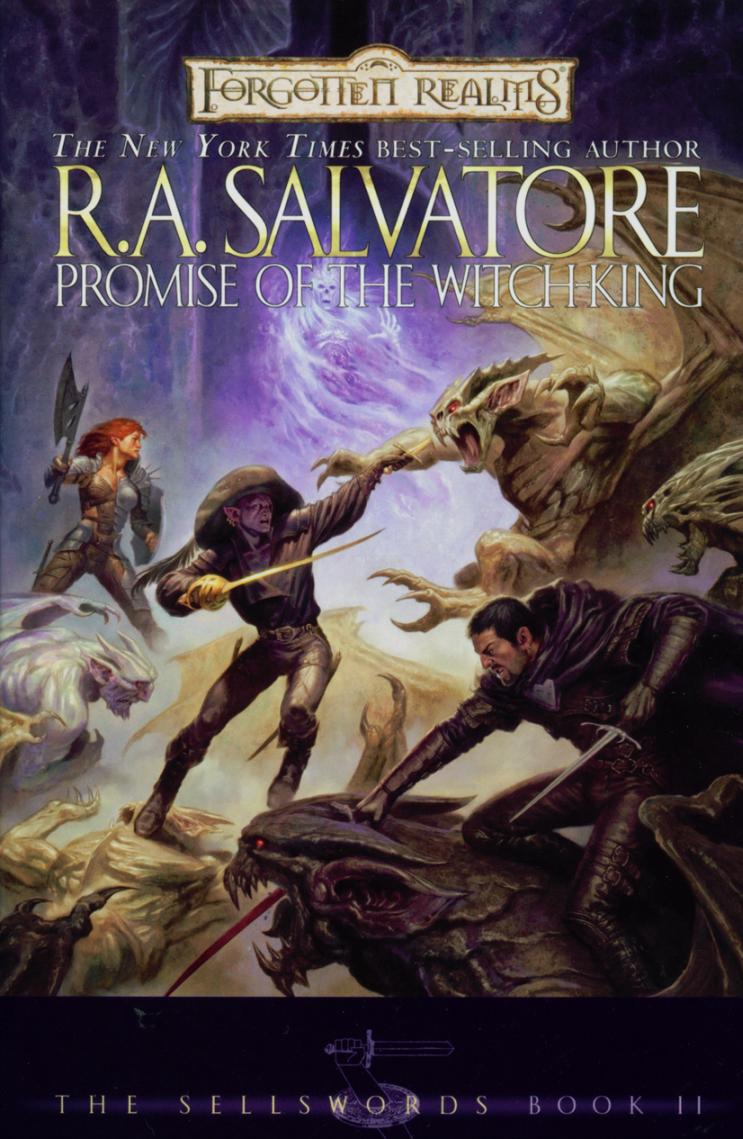
„Promise of the Witch-King” offered me a very engaging and entertaining reading, and this novel confirms that R.A. Salvatore is one of the best fantasy writers (also I loved the cover art of Todd Lockwood). I highly recommend the novel to all fantasy lovers, but if you haven’t read the first novel, „Servant of the Shard”, it is better to start with that one, because it will help you get used to the two main characters and their actions. I give this novel 8 points out of 10.
Dark Wolf

Thursday, January 24, 2008

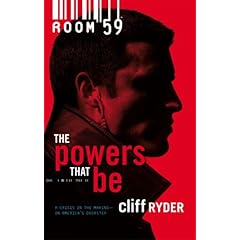
Room 59: The Powers That Be by Cliff Ryder


Mass Market Paperback: 320 pages
Publisher: Gold Eagle (January 8, 2008)
ISBN-10: 0373632657
ISBN-13: 978-0373632657

Room 59 is a multinational covert ops organization that specializes in doing the things that nations cannot do. The members are culled from various military, police and spy organizations and are trained to be the ultimate in deniable operatives. They are equipped with the very latest in high tech gear and can get support from just about any government organization. To top off all this, there is little interference or micromanagement from the countries involved.
Room 59 takes on the hard jobs that nobody in an official government military or intelligence capacity can do. They use small hard hitting teams that can do anything, including kill, to accomplish the mission. That is their mantra, the mission comes first.
So what happens when a top operative of Room 59 gets involved with an operation where he has a personal agenda? An agenda that nobody else in Room 59 knows about?
Room 59: The Powers That Be places Jonas, a former member of the German GSG9 special operations group into that situation. Jonas is tasked to keep an rogue organization from assassinating Raul Castro, Fidel Castro's brother. A powerful Cuban-American businessman wants Castro dead and the revolution in Cuba finally ended and he is willing to do anything to accomplish this goal. He sets up a mercenary group to invade Cuba and remove the current power structure. But first he must have Raul Castro exterminated.
The powers that be, though, do not want this. It is a common belief that if Castro falls, then the tiny island nation will be thrown into more civil war and chaos that will happen if the Cuban communists fall slowly apart under their own power. Room 59 is tasked with the mission to stop the assassination.
Jonas is placed in charge of the mission. But he has his own reason for getting involved because he has been to Cuba before and has ties to the chosen assassin.
The action is great. I enjoyed the plot and characters immensely. The author has no problem killing off characters, even important ones. He holds true to the mantra, mission first--everybody is expendable. I like this as it is a truism in military circles, people get wounded and killed. Nobody is so good as to be bulletproof. It also pays homage to an old military cliche, "no plan survives contact with the enemy." The plot twists and turns were good. Once I started reading I could not put it down.
I will admit I had a bit of a problem with the Gee-Whiz high tech gear. Some of the gear was too over the top and was not very believable. Kind of like some of the Bond gadgets. But that is my only complaint and a not very big one at that.

Wednesday, January 23, 2008

Sixty Days and Counting by Kim Stanley Robinson

Sixty Days and Counting is the final book in the "Science in the Capital" science fiction series. It is a series that deals with a liberal view of the environment and global climate change. To summarize the previous two books (Forty Signs of Rain and Fifty Degrees Below), Frank Vanderwal is scientist at the National Science Foundation, on loan from the University of California at San Diego, who is a quiet but unique character that is similar to many other characters that the author, Kim Stanley Robinson, creates in other books. His characters are usually into hiking, Buddhism, environmentalism, and liberal values. Frank has a chance (seemingly) meeting in a malfunctioning elevator with a complete female stranger, yet they end up making out in the elevator. She becomes a mysterious part of his time in Washington D.C. Meanwhile, weather patterns and environmental changes begin to happen unbelievably quickly all over the globe. Frank and his friends, Charlie and Anna Quibler are in position with the new administration to help make a difference on the science front.

Sixty Days begins with the new administration. Phil Chase has been elected president and Frank is brought along to advise the Science cabinet. He is an interesting character in that he is essentially homeless. At different times, he has lived in a treehouse in the D.C. area, lived with the Tibetan Buddhists who have been displaced from their (fictional) island by rising oceans, lived in his minivan and spends the night in a mini-cave when he visits his faculty and friends at UCSD. Frank also spends much time with the "ferals", a caste of people who do not work but also are homeless. They move from place to place as an underground society. These themes are often present in KSR's books.

The Quibler's are a quite a couple. Charlie has been a staffer with Phil Chase (the elected president) for many years. But recently, he's been a work-from-home dad. He spends all day with his toddler, Joe, and also most of the day on the phone or the internet doing his work. The time comes thought that he must put Joe in daycare and work like everyone else, especially when the president asks him point blank to come to work. His wife, Anna, is career scientist...an analytical hawk that is willing to let her husband be the main nurturer of the family. She is a hardcore scientist for the NSF and declines a job on the Science Cabinet. The Quibler's are supportive of Frank during his trials with an injury and also with his mysterious girlfriend.

I really love KSR's writing style. His plots have the usual highs and lows, just like everyone else, but he does not let the characters become to unrealistic. He has a way of starting a theme or train of plot and slowly developing it to only sometimes succeed. These plots meanderings bring about a type of nostalgia that doesn't always end the right way. His successes are satisfying and his failures are emotional. It's very unique. Even though my own awareness of the environment and attitude toward religion and social issues are almost polar opposites of KSR's, his writing style is most effective and poignant to me.

The author's most famous works are the Mars trilogy, a science fiction epic series dealing with the colonization and terraforming of Mars.

Sunday, January 20, 2008

The Journal of Curious Letters

The Journal of Curious Letters. Book one of the The 13th Reality

By James Dashner
Reading level: Ages 9-12
Hardcover: 432 pages
Publisher: Shadow Mountain (March 13, 2008)
ISBN-10: 1590388313
ISBN-13: 978-1590388310
What do you do if you get a strange letter in the mail telling you the that there is a danger to all reality and you might be able to help fix it?
Most of us would just think it a joke and ignore it. However, 13 year old Atticus Higgenbottom takes the other path and sets into motion a series of strange events that takes him on the adventure of a lifetime.
The strange letter from M.G. is followed by twelve more letters. Each letter is a clue to a riddle that Atticus, a.k.a. Tick, must solve if he is to assist in the attempt to save all of reality.
He is joined by several other children from around the globe in this quest. He meets strange and mysterious people, people who do not come from our reality. It seems that the war to save all reality is real and there are people on his side.
James Dashner has woven a strong tale of adventure and mystery that will appeal to the readers. Tick is a fun character, the kind of kid you would want as a younger brother. He is an average kid, maybe a bit smarter than most, but he leads a normal life until he is thrust into a situation most people would avoid. The appeal of his personality pulls you in and leaves you rooting for Tick and his friends.
The book is the first in a series revolving around the fight to defend reality from a rogue agent bent on destroying all the realities and remaking the universe in her image. I am looking forward to the next book.

Wednesday, January 16, 2008

The Spellsong War by L.E. Modesitt, Jr.

The Spellsong War is the second installment in Modesitt's Spellsong Cycle series of fantasy books dealing with an opera soprano that has been magically transported from her job and family on Earth to a medieval setting on a world called Erde where magic is called upon by music together with lyrics.

Anna, the soprano turned sorceress, is now the regent of a good sized portion of the land but it is poor and dry, even though her actions at the end of the previous book has brought more rain to Defalk, her regency. As regent, she wants to do her honest best to make Defalk a better place, but Erde, for the most part, is a male-dominated society where women, at best, are useful props for the lord or consort to which she is loyal. Anna's leadership clashes with this predominant society and she is forced to go from city to city demanding loyalty, usually using sorcery, spellsong.

The chapters are short and digestible although there's not much plot to this book. There's just going from hold to hold, destroying some and convincing others to be loyal to the regency so that it can make Defalk a better place. The author likes to describe nonverbal motions to help the dialogue...a lot! Sometimes, especially in this series, the reader can be drowned nonverbal communications that it's not always clear what is going on. This happens especially in his short chapters showing short scenes with the enemy, discussing strategy. I usually skipped quickly through those chapters even though the point of them was to foreshadow events and intentions.

Anna has a what you could call a crush on one of the Lords of Defalk, Jecks. He is accompanying Anna in her travels to be a guide to the politics of the land. He resembles Sean Connery or Robert Mitchum. She spends the entire book wondering if she will ever be free to pursue him.

I don't know if I will continue to read this series. It'll be a low priority whether or not I buy and read them. I'm sure that there is much more to come but this book as left me wondering if too much is being made in this series. It's a unique magical system but it is also getting old. She is discovering new methods too slowly it seems. This could be because she has no guide and is having to figure things out on her own. There are new enemies that have not yet been conquered. The reader can see that coming in later books.

Monday, January 14, 2008

Excalibur by Bernard Cornwell

It's been a while since I've finished a book with the holidays being as busy as they are, but I finally finished this one tonight, so here goes.

Excalibur is the final book of the Warlord trilogy by Bernard Cornwell, a historical fiction look at the Arthur legend. Once again, we are led through story in the eyes of Derfel, friend and warlord of Arthur. Britain is in disarray as Mordred, the subject of the title of the first book (The Winter King), is now grown and is as vile aj young king as the imagination can conjure. The Saxons are temporarily beaten back by a furious battle from a mountaintop. Through the shield walls and sword battles, Derfel and his companions endure triumphs and tragedies of Dark Age political and military life.

The famed sword, Excalibur, is the title of this book and that is tied to it being one of the magical Druid artifacts that Merlin attempts to use to bring back the Druid gods to reclaim Britain from the Saxons and the invading Christian societies started by the monks.

One of the suspenses that builds to a climax in Excalibur is that of how Derfel loses his hand. As sections begin in the book, Derfel is a Christian monk writing his memoirs long after his friends and family are dead. It is mentioned that he has no left hand. So the reader is always wondering in the back of their mind how it happened. At least I did. At one point, past halfway in the book, Derfel is captured by a character that he had cut the hand off of in the second book. So the suspense really rose at that point. I'm occasionally squeamish with the blood and gore, so I had to put the book down for a couple of days to avoid that bit of unpleasantness, but once I resumed reading, I found that the reader was in for a surprise as to how he finally loses the hand.

Some authors just have "it". "It" is a talent for writing realism, a waxing and waning of tragedy and triumph, and weaving love, war, politics and real world issues into a fine work of art. Bernard Cornwell has done this with the Warlord trilogy. As in his first two books, after the story, he explains some of the documented history of the battles and some of the writings surrounding the myth/legend/history of Arthur. Historian cannot agree to much about this period due to lack of evidence. That is why it is called the Dark Ages. But Cornwell does a fantastic job of speculating for us in a way that is romantic and heart wrenching. I highly recommend this series.

Wednesday, January 9, 2008

Rule Number Two by Dr. Heidi Squier Kraft

Rule Number Two

Lessons I Learned in a Combat Hospital

Dr. Heidi Squier Kraft (LCmdr, Ret)

There are two rules of war.
Rule number one is that young men die.
Rule number two is that doctors can't change rule number one.
--M*A*S*H: TV show

One of the remarkable things happening in today's military and today's war zones is the phenomenal writing that is occurring from the front lines in the form of blogs and books. Today, we are brought closer to the thoughts and feelings and experiences of our military through the written word, and they do it so well. Anyone wanting to know more about the War on Terror and our military has access to the information.

Rule Number Two is a collection of the experiences of Navy Lieutenant Commander Heidi Kraft during her deployment as a clinical psychologist with a Marine Corps Surgical Unit in Al Asad, Iraq. Dr. Kraft shares with us the stories of the damages of war and the amazing stories of repair of the spirit and the body. She also shares her longing for home and her 15 month old twins, jutaposing her life in Iraq with her family at home. There are stories that will make your heart soar, make you laugh out loud and make you cry. There is an especially gruesome story of her smallpox vaccination and one about camel spiders that are unforgetable!

Dr. Kraft allows us to share her laughter, her tears, her joys and her fears. This is a wonderfully readable book, and difficult to put down, as Dr Kraft weaves us into her stories. We meet the Marines, the Navy Corpsmen, the Navy doctors, nurses, technicians and the Marine working dogs.

Some of the most vivid stories are those of Cpl Jason Dunham. When Cpl Dunham was wounded, Dr Kraft was one of the people who sat and held his hand and talked to him. Cpl Dunham, who died later from his wounds, was awarded the Medal of Honor for his courage and bravery and sacrifice that day when he threw himself on a grenade to save his men. In later chapters, Dr Kraft shares the story of his passing and the story of his mother's, Deb Dunham, letter to Dr. Kraft to thank her for holding Jason's hand and caring for him. They are stories that will touch your heart.

One of the greatest gifts of this book is the peek into the medical care provided to our warriors - the love, care and respect they are given. This is a remarkable book and I recommend it to anyone interested in life in a war zone and in a hospital in a war zone.

Dr Kraft is donating 10% of the profits to the
Injured Marine Semper Fi Fund.

Thursday, December 6, 2007

Red - by Ted Dekker


“The Stakes of the mind-bending story spun in Black are raised to a new level in Red. In one world, Thomas Hunter must lead a small, highly trained force of 30,000 against an unstoppable army of a million warriors. In the other he will face an evil beyond the scope of his imagination.”

Book two of Ted Dekker’s “Circle Trilogy” takes the hero Thomas Hunter deeper into his “dream world.” Here we find that Thomas has been living, dreamless, in the world of Elyon for 15 years. While only eight years have passed on Earth. The Plague has been release in several cities all over the world with no antidote and a madman at the helm of it all.
The followers of Elyon now live in the seven forests and fight to protect these holy sites from the Horde. During this time Thomas of Hunter has been training the "Forest Gaurd" ans has become the supreme commander. He is loved by his people, and feared the Horde.
As the story unfolds Ted Dekker unveils further mystery and intrigue which keeps the reader on the edge of their seat.

I dare not reveal too much here for “Red” is a pivoting point for both “Black” and the final book “White.”
Click here for a video trailer for "Red."
Click here for an mp3 audio readiing for "Red."